
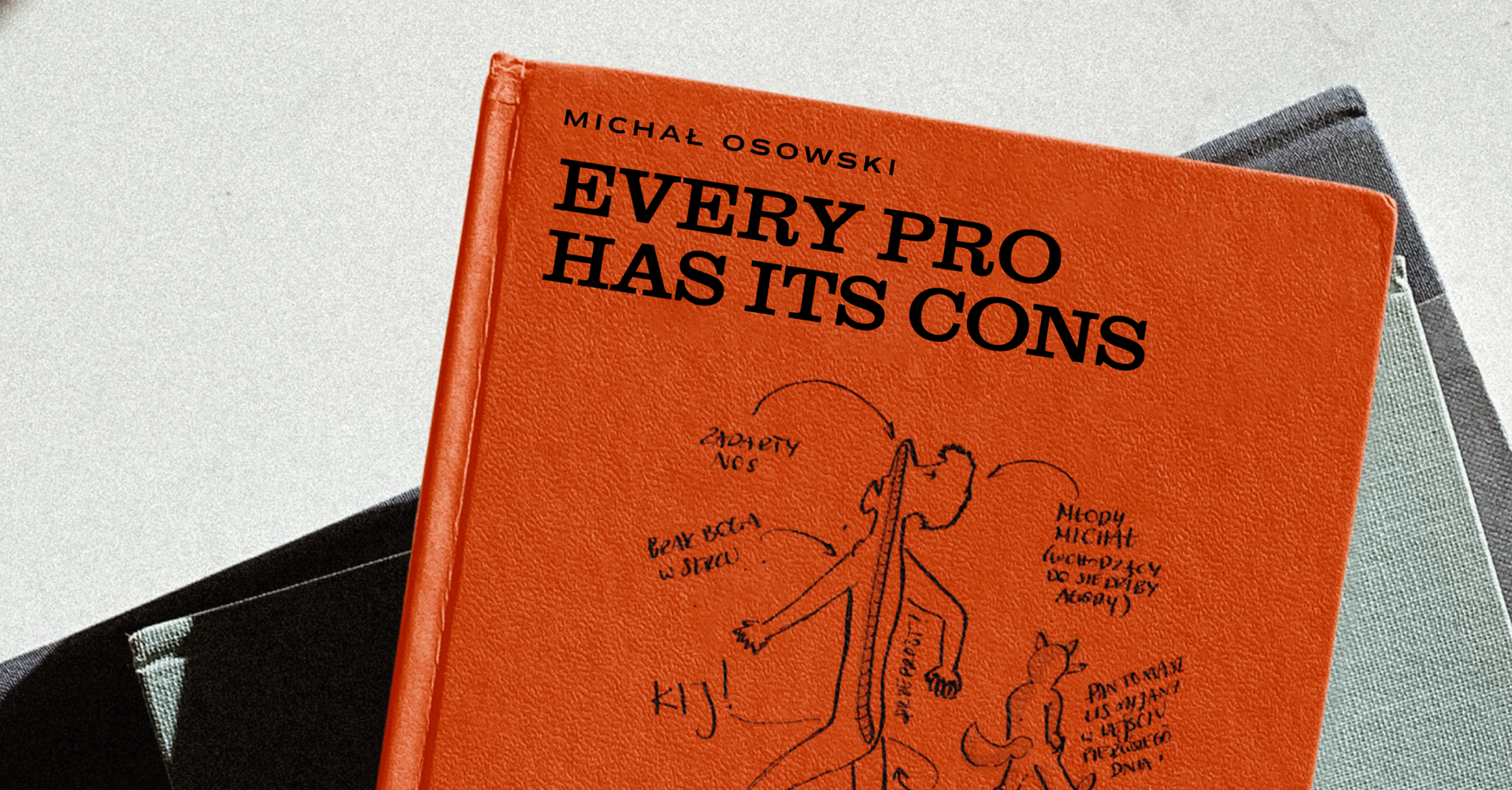
Everyone on the team has their own role, and you don’t have to play them all. Here’s how to grow and delegate effectively in a world where the “complete player” doesn’t exist and aiming for the “golden mean” would only lead to mediocrity.
Straddling the line between childhood growing pains and modern lifestyle diseases is a mindset that still torments many young—sometimes only young-at-heart—managers and specialists: the conviction that they already possess, or could quickly acquire, all-encompassing knowledge.
And so right up there with the Yeti, the Loch Ness Monster, and the fabled “complete footballer,” we find the myth of the boss-owner-founder who could knock out every task—if only there were a few extra hours in the day.
This attitude kills real delegation and outsourcing, strangles team growth, and stalls your own skill development. Ironically, the more “reasonable” it feels, the more harm it does. A Malcolm Gladwell keynote and a stint at “Brand Strategy School” cured me of a severe case of this syndrome back in 2017. I highly recommend both.
Read on to learn how to diagnose yourself, recognize the symptoms and consequences, and treat even the toughest cases of managerial omnipotence.
Every Pro Has Its Cons
Skill-wise, the “complete player” simply doesn’t exist. That has nothing to do with a lack of talent, your own limits, or not trying hard enough. It’s just the logical outcome of the fact that the traits, skills, and mindsets that matter at work often clash with one another.
Picture it this way: if you’ve ever compared athletes in a sports video game, you probably saw a radar chart like the one below.
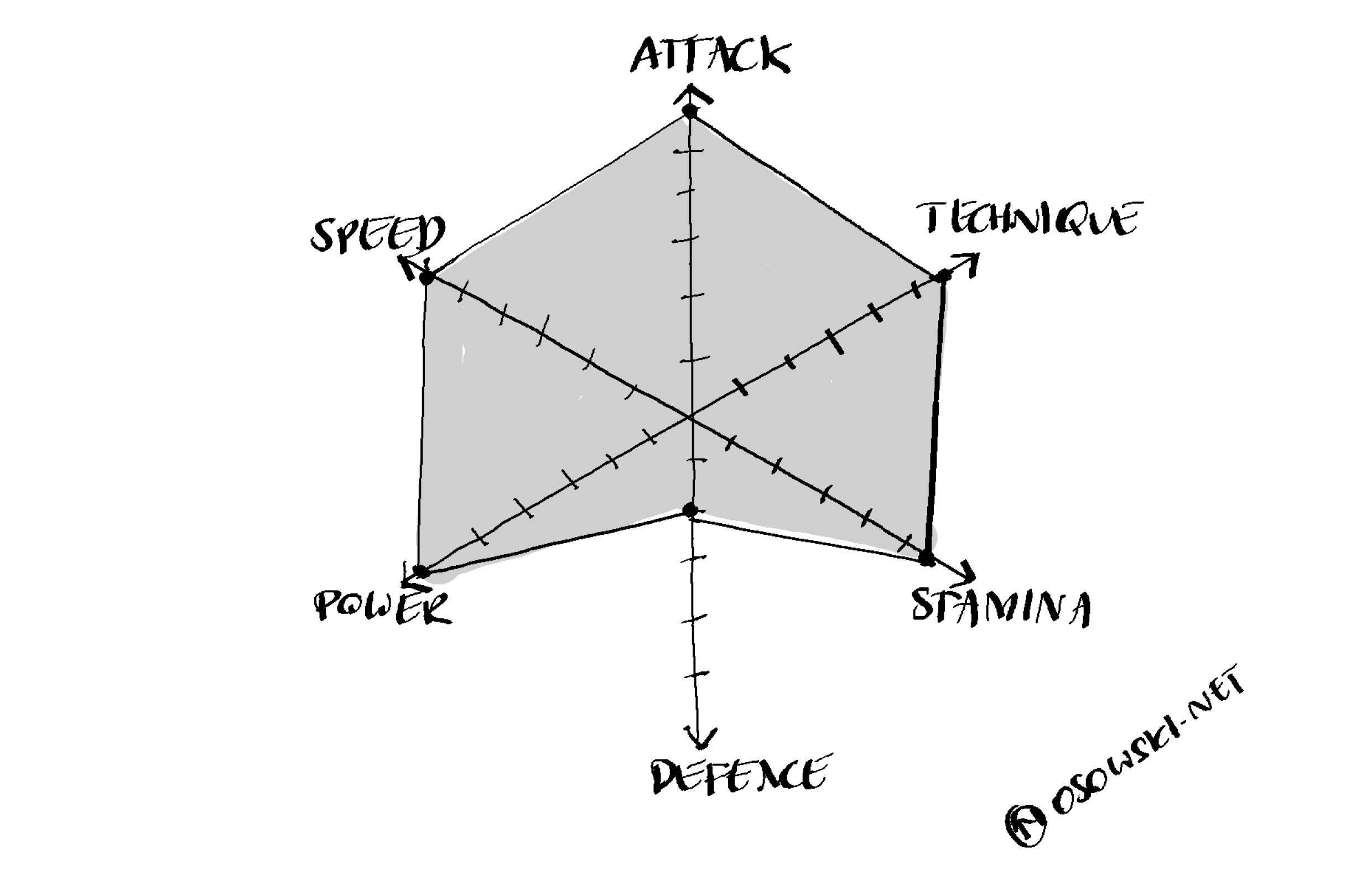
The core problem in the real world is that along each of these axes you can plot two qualities. Each could be useful in your work, yet they are mutually exclusive. To illustrate, here’s the custom set of traits I use to judge candidates for manager roles in my teams.
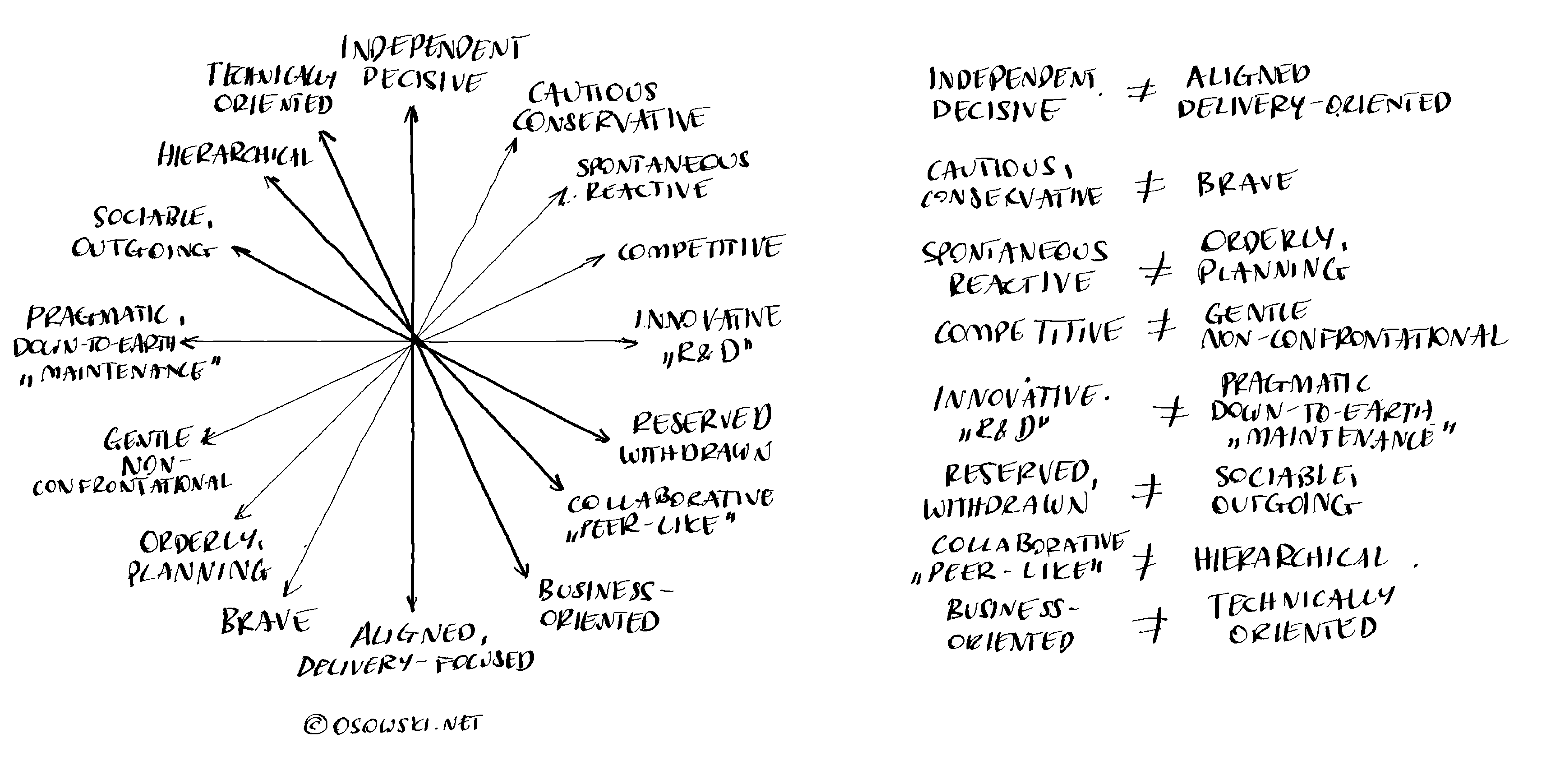
If, after fully understanding the above, you still think you could land on both sides of any axis—congrats on your first job, or best of luck with your speedy resocialization! Dear, you can’t be both “bold” and “cautious,” just like you can’t be both “egalitarian” and “hierarchical.” Even if you manage to be both “technical” and “business-minded,” day-to-day reality makes you pick one stance eventually. That’s why there’s no such thing as a true jack-of-all-trades, and every strength comes with a weakness.
Delegate Through Awe
When, as a young manager, I enrolled in the 16th edition of the Brand Strategy School back in 2017, I didn’t have a shred of humility in me. I rolled into the capital from provincial North, proudly flashing my badge as the youngest manager at my then-company. I swaggered into Agora’s headquarters—where the workshops were held—with a stick shoved so far up my backside that its tip poked out through my nose holding it high, with the other end neatly trimmed just so it wouldn’t clatter against the chairs.
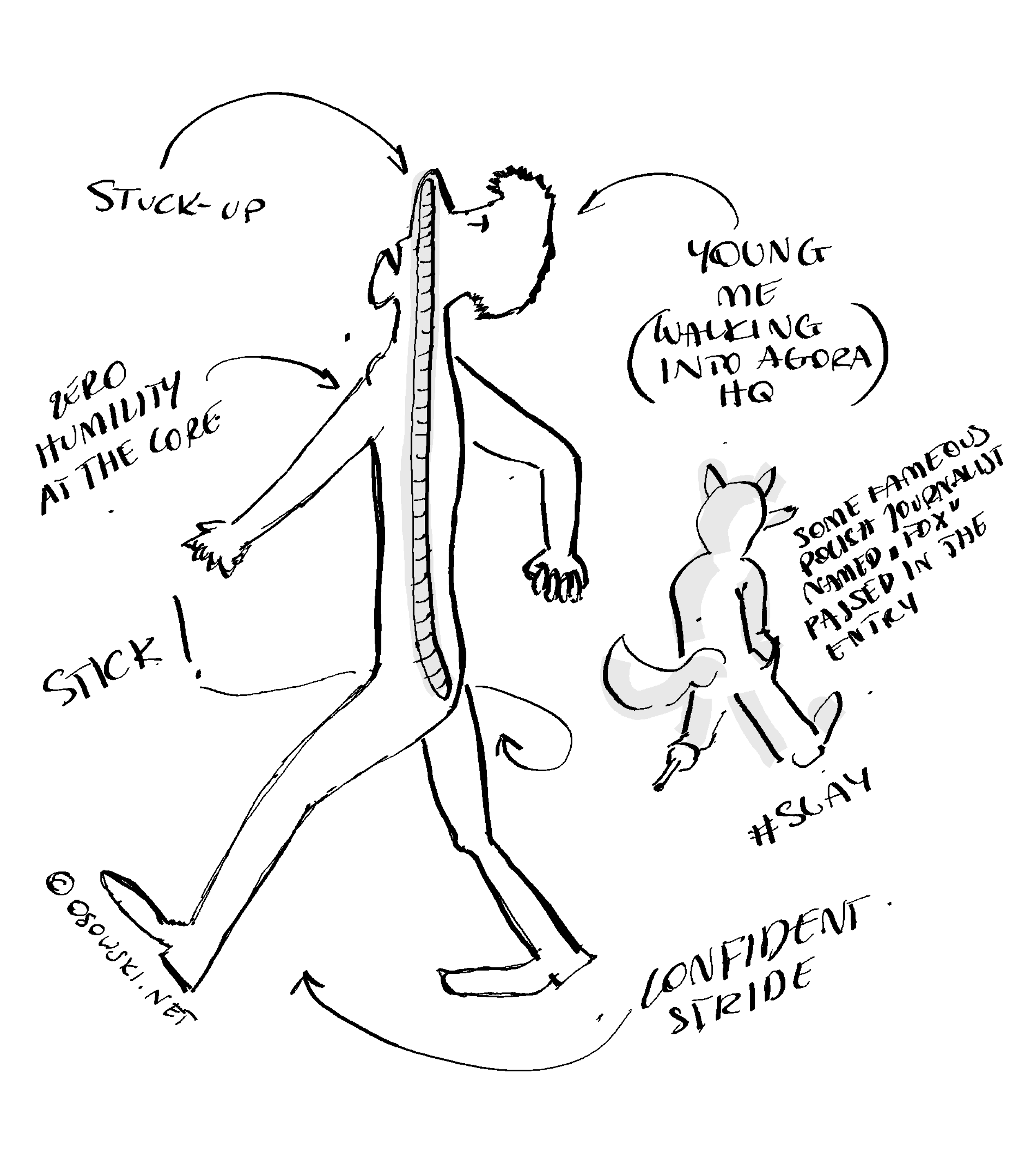
For the next 10 months, every 2 weeks, I worked with a group of about 30 talented marketers, digging into all facets of marketing and brand strategy. At every turn, someone outshone me at something. The quiet ones — more empathetic than I am and better at research. The friendly ones — able to team up with a wider range of people than my polarizing persona ever could. The cautious ones — eager to drill down to the core insight while I’d already be wrestling with a flawed rollout. And Bartek — don’t even get me started on Bartek.
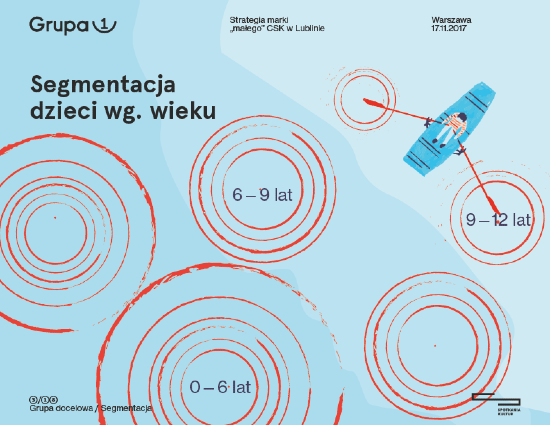
For each exercise we were shuffled into different groups and judged by experts. I quickly realized my best play was to get into the group with the widest mix of traits—people who outclassed me in as many ways as possible. Where self-doubt and my fragile ego had once camped, a calculated, slightly cynical awe—fed by quiet observation—moved in. That’s how, even though I’m pretty handy with Adobe Illustrator myself, my long-standing collaboration with Tomek Pilch of Blürbstudio began. Its very first product was the most beautiful pitch deck I’ve ever had to defend; you can admire one of its slides above.
Collective Genius
It probably wouldn’t have been nearly as easy had Malcolm Gladwell’s talk not landed in my hands around that time. Using the example of 2 landmark discoveries, Gladwell explores the value that comes from individual versus collective genius. You’ll find the full talk below.
 Condé Nast
My own experience, combined with Gladwell’s insights, shaped my thinking about the value of solo versus team work—and about how to guide both personal and team development—in two key ways:
First—today you’re better off being a narrow-field specialist with a broad overview than a pure generalist. McKinsey calls this profile the “T-shaped professional”.
Second—unless you’re tackling a simple, one-track problem that needs no elaborate solution—just a string of quick, straightforward decisions—the challenges of the modern workplace are best solved by a team rather than alone.
Clone Wars
Even if we agree on the value of collective genius, a trap still waits—the “self-hugging” bias. It shows up in our tendency to rate people who share our own personality traits more favorably. ❶ This is how homogeneous teams—full of near-clones—form instead of heterogeneous ones that mix people with different skills or traits.
Studies show that, under pressure, heterogeneous teams finish complex tasks 25% faster than homogeneous teams. ❷ At the same time, they make decisions 40% more slowly than internally uniform teams, yet with 50% fewer errors. ❸ Their solutions are 30% more innovative, but—unfortunately, despite that edge in complex work—they carry a 25% higher risk of delays. ❹ My favorite study of climbing teams found that diverse groups reached the summit with a 35% higher probability, but endured 20% more internal conflicts along the way. ❺ And in software work alone, homogeneous teams were 60% more prone to simple coding errors. ❻
Bottom line: a heterogeneous team gives us the richest pool of collective genius, but—as the data show—it isn’t a cure-all. In software, homogeneous teams seem better for Kanban-style maintenance, while diverse teams shine when building new functionality from scratch in Scrum. Still, in nearly every field today, you’re smarter playing as a team—a lesson the cheesy movie clip below drives home every time I roll it out.
Sources
① “Self-hugging is a cognitive bias where individuals seek in others the qualities they believe about themselves, leading to a tendency to favor those who are similar to them. This bias can impact interpersonal evaluations and social relationships by creating an inflated perception of individuals who share similar attributes or beliefs.” Brewer, M., & Gardner, W. (1996). Who is this “we”? Levels of collective identity and self-representations. Journal of Personality and Social Psychology, 71(1), 83–93. Source: SpringerLink.
② "Heterogeneous teams completed complex tasks 25% faster than homogeneous teams, especially under high-pressure conditions." Bradley, B. H., Postlethwaite, B. E., Klotz, A. C., Hamdani, M. R., & Brown, K. G. (2012). Reaping the benefits of task conflict in teams: The critical role of team psychological safety climate. Journal of Applied Psychology, 97(1), 151-158. Source: PsycNet.
③ "Teams with high diversity showed a 40% reduction in decision-making speed due to increased deliberation, but were 50% less likely to make errors." van Knippenberg, D., & Schippers, M. C. (2007). Work group diversity. Annual Review of Psychology, 58, 515-541. Source: Annual Reviews.
④ "Functional diversity in engineering teams led to a 30% improvement in project innovation but caused a 25% increase in project delays." Dahlin, K. B., Weingart, L. R., & Hinds, P. J. (2005). Team diversity and information use. Academy of Management Journal, 48(6), 1107-1123. Source: Academy of Management Journal.
⑤ "Diverse mountaineering teams were 35% more likely to reach the summit compared to homogeneous teams, but experienced 20% more intra-team conflicts." Anicich, E. M., Swaab, R. I., & Galinsky, A. D. (2015). Hierarchical cultural values predict success and mortality in high-stakes teams. Proceedings of the National Academy of Sciences, 112(5), 1338-1343. Source: PNAS.
⑥ "Homogeneous teams in software development completed tasks 15% faster but had a 60% higher rate of overlooking bugs due to shared assumptions." Loyd, D. L., Wang, C. S., Phillips, K. W., & Lount Jr, R. B. (2013). Social category diversity promotes premeeting elaboration: The role of relationship focus. Organization Science, 24(3), 757-772. Source: INFORMS PubsOnline.